To mark the anniversary of the Iraq
invasion, the Bush administration sent its minions to the talk shows with
a simple message: we have to stay the course. To make any changes now,
they argue, would only help the terrorists. Paul Wolfowitz pulled no
punches in his analysis on the Lehrer News Hour. The war against terrorism,
he said, would last decades, generations. No matter how much violence
occurs, we must stay the course, we must hold to our principles, we must
not cave like Spain, we

must not reward the terrorists. These things take time, he said,
there will be setbacks. There will be more violence.
Mr. Wolfowitz did a great job. He spoke of violence in a calming
tone, reassuring the more naive of us that bad things happen and we must
not lose our resolve because of them. Unfortunately, he used that
calm voice long after the time for America to decide - let alone be resolute
- had passed.
For he just lay bare the argument that we could not wait around for the
UN to follow the technicalities of civilization in its application of global
law, in Iraq or anywhere else. According to Wolfowitz, this other,
more brutal and murderous course will take longer. If 9/11 was proof
that those global containment policies were too weak, then what does 11-M
prove, or Bali, or Morocco? And we are told, in calming tones, to expect
much more during this newly prolonged period.

No, there were no calm voices in the months following 9/11. No
grown-ups to gently inform us that bad things happen and we're not all
gonna die tomorrow and so on. That's apparently not the way they wanted
it. And so even today, years after 9/11, many Americans are not even
aware that we had a decision to make at that time, and missed it amidst the
hysterics. We think Spain should have acted rationally and in accordance
with our wishes. But
you remember how long we lost as a nation
our ability to rationally debate anything - on the streets and in our government
offices. Members of Congress passed laws without even reading them,
and seemed proud of it. We had so entirely lost sight of our principles
that I heard Americans positively
deride entire nations whose leaders
dared to speak of them. Principles which we preached to the world
for decades.
But what choice did we have, as everyone asked in 2001? Do nothing?
Follow
diplomatic channels (remember to sneer when you say
this)? No, we had another choice. We could have joined the international
community in offering money and military support for the expansion of international
law. We could have tightened security in this country and denied al
Qaeda war between nations. We could have stayed the course with the
rest of the civilized world.
The fact is, terrorism has been with us a long time. Many of those
countries which now oppose current US foreign policy have had to deal with
it on a large scale. For that reason, the issue of terrorism has been
one of top priority in the United Nations for a long time. The decision
of the world community in defeating terrorism has been laid out clearly.
It is that
we must not give terrorists what they want.
What al Qaeda wants is war. And not just a little war, but a war
to unite the Muslim world against the US. War between nations, replete
with nationalism and the death of innocents, is the only thing able to destroy
the civilization which would overcome them. In such a case, the UN
has said, we must hunt them without taking the bait. We must take
them from action without making them martyrs or killing lots of civilians
and increasing their recruitment. We must not create, support or ally
with terrorist groups along the way.
To the UN, the increase in global political crime had to be met with an
increase in global law, which is the precursor to global democracy, and
this became a top priority to the security council. When they finally
saw an opportunity to move this forward - with the close of the cold war
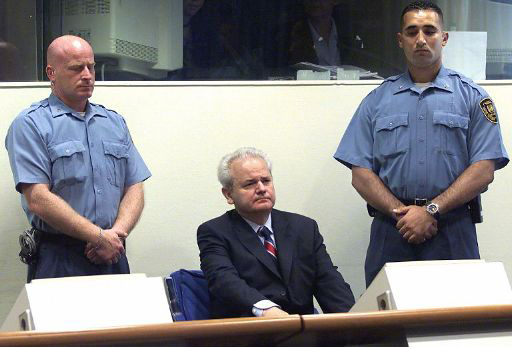
between Russia and the US - they moved rapidly. Within 7 years they
had formed a court with the jurisdiction to bring the law of democratic
civilizations to the world, and just a couple of years later, successfully
countered problems of national sovereignty and prosecuted a nation's leader
for war crimes.
Even though this was a remarkable success, achieving unparalleled heights
in international cooperation, America didn't notice.
The general public, long uninterested in international affairs,
neither saw it nor understood the significance. So after New York,
when we suddenly reengaged, far too many seemed to think that nobody had
ever considered this problem before. Nor were we educated on the issue
by our leaders.
It was very telling that after the attacks in Bali, many here said things
like 'now perhaps the world will believe us when we say this is a global
matter'. These statements proved quite embarrassing for us when they
reached Europe, where efforts to defeat terrorism as a political tool have
been ongoing for decades, hampered greatly by the propensity of large powers
to create, support and ally with terrorist groups.
The plan of the democratic nations is to smother terrorism with civilization,
to marginalize, isolate, and quietly hunt and attrit terrorists without
turning them into national heroes. We could have chosen to treat
terrorists like the criminals they are, and supported the expansion of global
law to deal with them. With US financial and military support, the
law of Nations would have teeth. And for one brief moment in the pre-war
days in Iraq, the power of such a cooperation of nations was seen, albeit
unwittingly for team Bush. UN inspectors crawled all over Iraq with
unfettered access, with US troops surrounding Baghdad.
I remember the Bush administration grumbled about the cost of having
our military stand around out there.
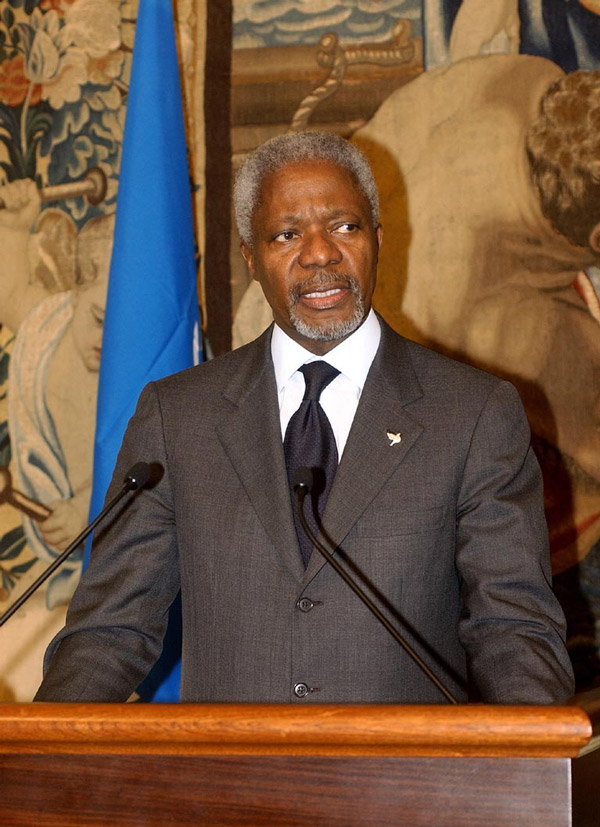
In fact, following 9/11, UN Secretary General Kofi Annan said much the
same as Wolfowitz. We must stay the course. Setbacks will happen.
Violence occurs. It will take time. But we must treat
terrorists as criminals and not cave to their desires for war. Good,
grown-up advice, perhaps, but I defy anyone to find any media outlet in
the US which carried these

admonitions. We never heard it, and what was more, we were not engaged
enough to understand it.
So in the face of violence and fear, goaded by the new right-wing government
which played on our general ignorance of the choice to be made, America
hastily caved to the terrorists and gave them what they wanted. We
gave them war between nations.
In the end, they hit us where we were the most vulnerable: our education.
It must have been obvious to the terrorists casing our streets that
we had no clue what principles were involved in the international debate,
nor even that such a debate existed. How, then, could we hold true
to principles?
I am ashamed, on this anniversary, that they succeeded so well.
 Stay The Course? Too Late...